Confirmed Guests:

António Damásio is a neuroscientist, professor at the University of Southern California and founder of the Brain and Creativity Institute. He is today the greatest scholar of the biology of consciousness and a profound thinker of the human condition. Damásio unites scientific research with reflections in the fields of psychology, philosophy and sociology, reflecting on human culture in an innovative way.
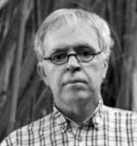
Antonio Donato Nobre lived and worked for 20 years in the Amazon and for more than three decades held a position as senior scientist at INPA – a leading organization for tropical rainforest investigation. Presently he is senior scientist at INPE – the Brazilian Space Research Institute, where he leads the terrain-modeling group of the Center for Earth System Sciences and is professor in its PhD program. With a productive and well-regarded academic career, Nobre is involved in cutting-edge research in topics like carbon, physical ecology, physical geography, hydrology, climatology, ecosystem restoration, degraded land recovery, sustainability and the theories of the Biotic Pump and Gaia among other topics.

Ailton Krenak is internationally recognized as an environmentalist and indigenous leader. He teaches “Culture and History of Indigenous Peoples” and “Arts and Crafts of Traditional Knowledge” at the Federal University of Juiz de Fora, where he received the title of Doctor Honoris Causa.
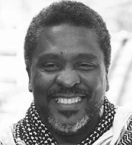
Edgard Gouveia Júnior is an architect and urbanist. From 1993 to 1996 he was a researcher at Instituto TIBÁ – Intuitive Technology and bio-architecture. He post-graduated in Cooperative Games at Universidade Monte Serrat in 2003, where he was also post-graduation Professor from 2004 to 2006 on the course Developing Common-Unities. Edgard is an advisor and international speaker in the areas of young protagonism, molecular and community empowering and Cooperative Games, and has been a facilitator in the Cooperation Project. He is president and co-founder of Instituto Elos – BR, and member of international web Berkana Exchange since 2006. In 2006 he became a Fellow of the Ashoka Foundation. He is currently involved with Warriors Without Weapons as co-creator and designer of the Oasis Game.
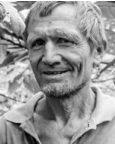
Ernst Gotsch is a swiss farmer and researcher, creator of the set of principles and techniques that make up the Synthetic Agriculture, a new technique of rapid recovery of poor soils by imitating existing patterns in nature in which carefully selected species of plants.
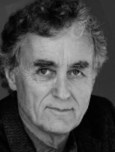
Fritjof Capra, Ph.D., is a scientist, educator, activist, and author of many international bestsellers that connect conceptual changes in science with broader changes in worldview and values in society. A Vienna-born physicist and systems theorist, Capra first became popularly known for his book, The Tao of Physics, which explored the ways in which modern physics was changing our worldview from a mechanistic to a holistic and ecological one.

Guto Pompéia is a phenomenological psychotherapist (existential psychoanalyst) and professor of Psychology at the Pontifical Catholic University of São Paulo. Nowadays, Pompéia has been leaning on questions of last order, such as: the constant formation of identity in a fragmented world, education and technology, and the search for freedom.
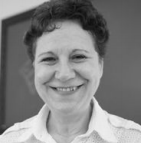
Lia Diskin is an journalist, specialist in literary critic and co founder of Palas Athena Association. She’s been creating many cultural and social educative programs and wrote many books such as Cultura de Paz – Redes de Convivência, Não Violência Doméstica and Vamos Ubuntar – Um convite para a Paz. At UNESCO’s 60 years celebration, she received a prize for your contribution for Peace Culture and Human Rights. She was also rewarded by Jamnalal Bajaj Foundation for promoting Gandhi’s values out of India. Presently, she is a council member of Sarvodaya International Trust.

Luiz Alberto Oliveira is a physicist, cosmologist and researcher of Institute of Cosmology, Relativity and Astrophysics. Since its foundation in 2015, Luiz Alberto is the curator of the Museu do Amanhã

Luiz Fernando Scheibe is a geologist with a PhD in Mineralogy and Petrology from the Institute of Geosciences of the University of São Paulo and today he is the an emeritus teacher at Federal University of Santa Catarina. He has an academic background interdisciplinary approach to Geoecology and Hydrogeology, as Environmental Analysis, Sustainable Development, Water Resource Management, Environmental Education, Urban Development, among others. Luiz Fernando also participates in the Environmental and Permaculturana Analysis Group at UFSC and coordinates the Guarani / Serra Geral Project project.

Luiz Marques is a professor at the Department of History (IFCH) at Unicamp. He has published several books and essays on Classical Tradition and, more recently, on the increasing anthropogenic degradation of ecosystems, among them, “Brazil. The legacy of slavery and environmental suicide “(History of Nations, London, Thames & Hudson, 2012). Nowadays he participates, with a collective of professors of Unicamp, of the creation of the Crisálida Project, dedicated to the information, research, debate and academic mobilization around the contemporary socioenvironmental crises.

Mônica Pilz Borba is a brazilian pedagogue and founder of the Instituto 5 Elementos – Educação para a Sustentabilidade, a pioneer organization in environmental education in Brazil.

Rita Mendonça is a biologist and sociologist, is also the author of the books Como Cuidar da Natureza and Conservar e Criar. She is a Schumacher School teacher and coordinator of Sharing Nature Worldwide, both in Brazil, and a partner at the Instituto Romã

Roberto Gambini has been a Jungian therapist for thirty years. He is also a lecturer and essayist and has published several books such as O Duplo Jogo de Getúlio Vargas, Uma Conversa Brasileira and many others. He is a member of the International Society of Jungian Psychology.

Roman Krznaric is a social philosopher whose books, including Empathy, The Wonderbox and How to Find Fulfilling Work, have been published in more than 20 languages. He is the founder of the world’s first Empathy Museum and of the digital Empathy Library, and was also a founding faculty member of The School of Life. He is a Research Fellow of the Long Now Foundation in San Francisco, and a Research Associate at the Design Against Crime Research Centre at Central Saint Martins college of art and design in London.
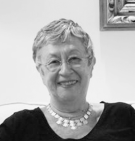
Scarlett Marton is professor of History of Contemporary Philosophy at the University of São Paulo. He completed his Masters in Philosophy at the Université Paris I Sorbonne (1974), his doctorate (1988) and his Ph.D. (1996) in Philosophy at the University of São Paulo. She is considered one of the greatest brazilian experts of Friedrich Nietzsche’s philosophy. She is the author, among other books, of Nietzsche, das forças cósmicas aos valores humanos, Extravagâncias. Ensaios sobre a filosofia de Nietzsche, A irrecusável busca de sentido. Autobiografia intelectual, Nietzsche, seus leitores e suas leituras. She is the founder of Nietzsche Study Group (GEN); is the editor-in-charge of the “Nietzsche Notebooks” and the “Sendas and Veredas Collection”.

 Consciousness³
Good post. I learn something new and challenging on sites I stumbleupon everyday.
It will always be useful to read articles from other writers and use a little something from other websites.
LikeLike